
Federal BOP Release Meaning
The Federal Bureau of Prisons system holds people serving federal sentences in institutions across the country. Livingston County has no verified BOP institution. A Livingston-connected defendant may still enter BOP custody after a federal conviction, so the national locator is the correct public search channel.
A locator result with a past release date and no current facility, or a location of RELEASED, supports one narrow conclusion: the person left BOP custody. BOP warns that “Not in BOP custody” does not rule out another jurisdiction's custody. It also does not resolve federal supervised release, which is post-prison oversight ordered in the federal case.
The Livingston County Jail cannot certify a BOP release merely because the person once had a local connection. Use the federal system for the federal sentence, then check any separate state, county, immigration, or court status that the facts support.
Check a Federal BOP Release
The BOP Inmate Locator searches federal records by name or federal identifier. An identifier usually gives a cleaner match than a common name. Compare all returned identity details before relying on the result.
- Open the official BOP locator and choose name search or identifier search.
- Enter the person's full name and available identity fields, or use the known BOP, FBI, DCDC, or INS number.
- Compare the returned name, age, race, sex, identifier, and institution or status information.
- Read the release date and location literally. RELEASED or no facility concerns BOP custody only.
- Check the federal court docket or release order for the legal result and any supervision term.
- If another agency may hold the person, continue with that agency instead of reporting an unrestricted community release.
The Livingston County released-inmate search separates this federal route from county jail, MDOC, court, and immigration checks.
Federal BOP Release Records
The locator is the fast public status layer, not a certified release record. When formal documentation matters, seek the existing BOP record or federal court document that answers the exact question. A sentencing judgment, release-related docket entry, or BOP record may explain more than the public locator line.
National inmate locator and federal records system
BOP Inmate Locator
BOP locator record explanation
Ask for a named existing record and identify the person with the federal number when known. Federal records processes can involve exemptions and redactions. The U.S. Marshals Service handles federal pretrial detention but has no general public released-person locator, so a pretrial release question usually turns on the federal docket and order rather than BOP.
No Livingston BOP Facility
No federal Bureau of Prisons institution was identified within Livingston County. The federal system appears in the county facility map because jurisdiction, not local bricks and mortar, controls a federal sentence search. A Livingston arrest or resident can become a federal defendant and serve a sentence outside Michigan.
No local BOP address, capacity, or release desk should be invented. The national locator follows the person across BOP institutions and can retain a past release date after custody ends. The federal court record belongs to the court that handled the case, while supervision information belongs with the federal system responsible for it.
A county jail departure may also precede federal transfer. That movement is not community release. The local jail movement record may name the receiving authority, while the federal docket supplies the legal custody context.
Federal BOP Release Fields
BOP locator fields should be read as federal custody data. They do not become Livingston County jail fields because the person has a local address or case connection.
| Field | What it establishes |
|---|---|
| Federal identifier | Distinguishes the federal record from people with similar names. |
| Name and identity details | Support a careful match before status is reported. |
| Current institution | Identifies present BOP custody when a facility is shown. |
| Release date | Records the date BOP reports for release from its custody. |
| RELEASED or no facility | Shows the person is no longer held by BOP, without resolving other custody or supervision. |
BOP notes that some historical federal records may be incomplete based on the date and source of the record. Save the access date and exact wording. A later agency record or court order may be needed when the locator does not answer the full question.
Federal BOP Locator Screen
The official BOP locator provides the national name and identifier search used for a Livingston-connected federal release.
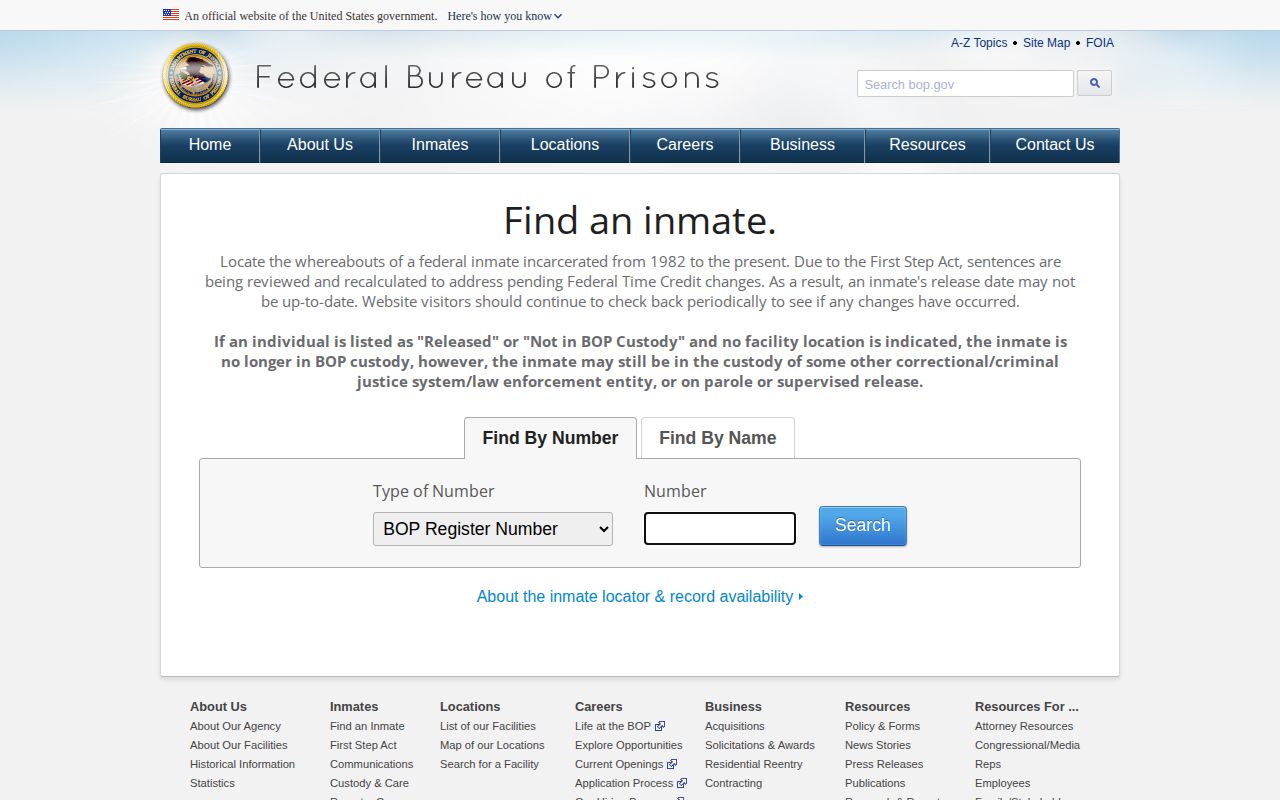
The search screen leads to the federal record. It does not search Livingston County Jail, MDOC, or ICE custody.
Read Federal RELEASED Status
The BOP record-field explanation shows why RELEASED must remain a bounded term.
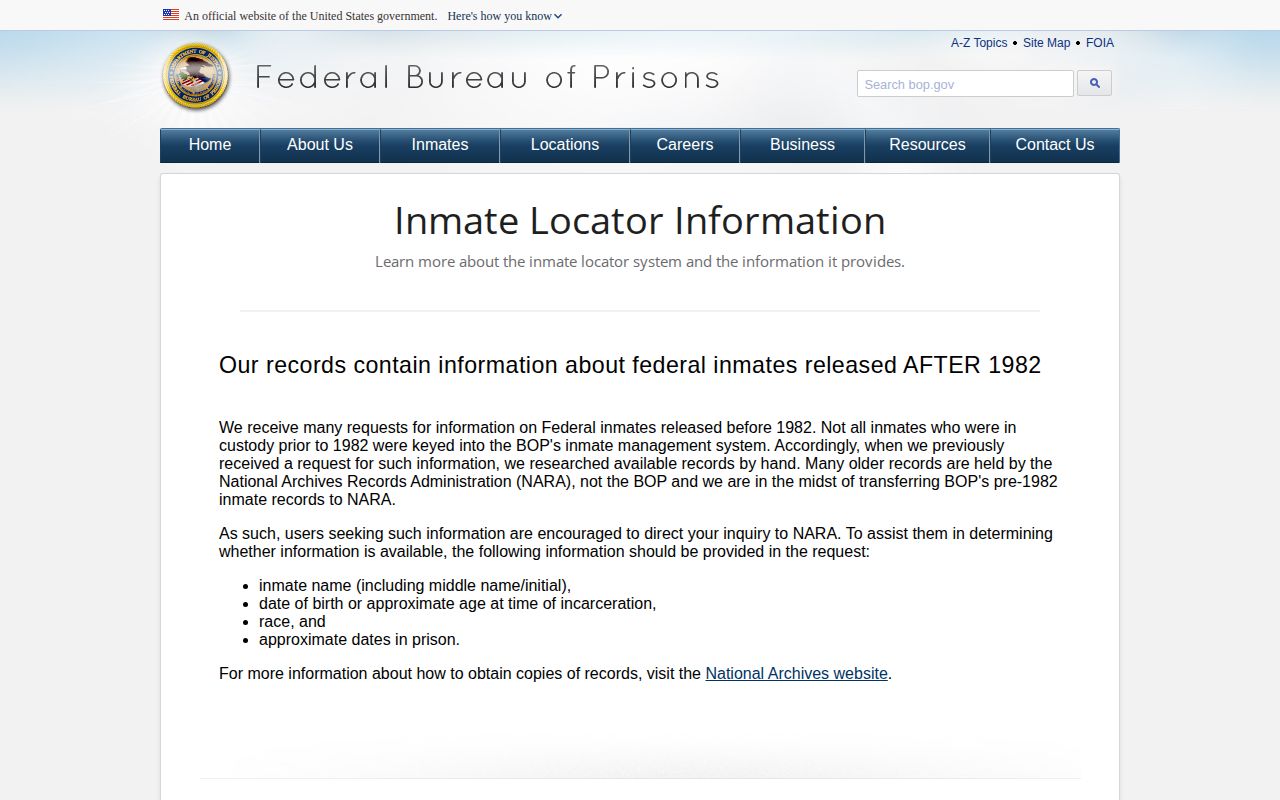
The field confirms BOP status and the displayed federal release date. It does not prove that federal supervised release ended, that another sovereign has no hold, or that the person is currently in Livingston County.
Federal Release Versus ICE Transfer
A federal custody change can lead to another federal system. ICE detention is civil immigration custody and uses the Online Detainee Locator System, not the BOP locator. ICE says its locator includes current detainees and people released from ICE custody within the preceding 60 days.
If a BOP record says RELEASED and an ICE search shows current detention, the person left BOP but did not enter the community. That is continued custody under a different authority. The short ICE recent-release horizon also means an old no-match cannot reconstruct immigration history.
This distinction also applies to Livingston County Jail. A local departure followed by an ICE match is a transfer, not a community release. Use each locator only for the agency it covers, and seek records when the public window no longer reaches the event.
Federal BOP Release and Supervision
Federal supervised release is distinct from BOP custody. It is a court-ordered period of community supervision that can follow imprisonment. The BOP locator can show that prison custody ended, but it is not the source for declaring that supervision ended or listing every current condition.
Read the sentencing judgment and later federal docket entries for the imposed term and any court action. The responsible federal probation office is the proper operational source when a lawful status question remains. A RELEASED line should therefore be written as “released from BOP custody,” not “free of all federal authority.”
The same precision applies to a past release date. It is evidence of the recorded BOP exit, not a promise about present location. A later violation, new case, or custody event would require a newer court or agency record.
Federal Pretrial Release Records
The U.S. Marshals Service manages federal pretrial detention through federal, state, local, and private beds. A person can therefore be in federal custody without appearing as a sentenced BOP prisoner at that stage. USMS does not provide a general public released-person locator comparable to BOP.
Use the federal court docket and release or detention order for the legal status. If the person later entered BOP custody after sentencing, then the BOP locator becomes relevant. A USMS records request can seek existing archival material, but it is not a live release-verification service and may produce redactions or exemptions.
A Livingston County jail movement that names federal pickup shows continued custody. The federal order and responsible district must be followed before describing what happened next.
Verify Federal Release Across Systems
One person can have records in several systems, but each system speaks only for itself. BOP covers sentenced federal custody. USMS commonly handles federal pretrial detention. ICE covers civil immigration detention. Livingston County Jail and the Michigan Department of Corrections (MDOC) maintain separate local and state custody records.
- BOP RELEASED
- Federal prison custody ended on the reported date.
- Federal court order
- Shows the legal release or detention decision and any supervision ordered by the court.
- ICE match
- May show continued immigration custody after another agency released or transferred the person.
- Local jail movement
- Can identify a federal pickup without proving later community release.
Keep the access dates close together when comparing systems. A transfer may post at different times, and an old result cannot settle present status. When the records conflict, the agency currently shown as custodian should be asked to clarify its own entry.