
Understanding Livingston County Releases
A Livingston County release means that one custody event ended. It does not always mean the person went home. The Livingston County Jail may record a bond release, court-ordered release, time served, sentence completion, or movement to another agency. A move to the Michigan Department of Corrections, another jail, a hospital, federal custody, or immigration custody is a transfer. Custody continues in those cases.
The record source follows the system. The Livingston County Sheriff holds jail booking and movement data. The 53rd District Court or 44th Circuit Court holds the order and case history. Michigan Department of Corrections records cover state prisoners, parolees, and people within its probation scope. Federal systems keep their own records. For Livingston County released inmates, the best result normally joins a custody-status source with the court or agency record that explains why the person moved.
Livingston County Release Types
Release labels have precise meanings. A bond may end local confinement while the case remains open. Parole ends prison confinement but begins or continues MDOC supervision. Discharge is different because MDOC jurisdiction has ended. A court dismissal or acquittal resolves a charge or case, yet a separate warrant or hold can still prevent physical departure. Reading the label before choosing a search channel avoids a false conclusion.
- Bond or recognizance
- Pretrial jail custody ended subject to the case and bond terms. Check the jail movement, bond entry, and MiCOURT register.
- Time served or sentence completion
- The stated jail term ended, subject to other holds. Pair the release field with the sentencing record.
- Parole
- Prison confinement ended while MDOC jurisdiction continues. Read OTIS status, Date Paroled, and supervision information.
- Probation
- A community sentence that may or may not follow jail. Use the sentencing court and, when applicable, OTIS.
- Discharge
- MDOC jurisdiction ended. OTIS discharge data or a discharge certificate is the stronger source.
- Transfer
- Another agency received the person. Follow the receiving locator and movement record.
- Dismissal or acquittal
- A legal result, not the physical exit time. Pair the court order with the jail movement.
Booking charges are allegations, not final outcomes. The court register may later show a plea, dismissal, verdict, sentence, or set-aside that differs from the booking entry.
Livingston County Release Record Fields
There is no single document called the Livingston County release record. Useful records may include a booking sheet, jail movement log, release screen, bond receipt, property or account closing record, and the court order that authorized release. A focused request should name the fields needed. That helps the Sheriff locate an existing record without being asked to create a new report.
| Field | What it shows |
|---|---|
| Full name and identifier | Connects the release entry to the correct booking or person record. |
| Booking date and time | Marks the start of the local custody event. |
| Arresting and holding agency | Identifies which office supplied or maintained the custody data. |
| Court and case number | Links the jail event to the official register of actions. |
| Bond event | Shows the bond type, amount, or posting transaction when recorded. |
| Release date and time | Shows when jail processing recorded the physical exit. |
| Disposition or reason code | Distinguishes bond, court order, time served, completion, or coded movement. |
| Destination or receiving agency | Helps separate a transfer from a community release, when disclosable. |
| Booking photograph | Connects an image to that booking, subject to review and redaction. |
If the export uses codes, ask for the code key or field definitions. A court order may explain the legal basis while the jail record supplies the actual exit time. Both records can be needed to resolve one Livingston County release.
Note: A jail release entry can show movement and time without stating the final result of every related court case.
Request Livingston County Release Records
Michigan FOIA, MCL 15.231 through 15.246, applies to nonexempt records held by covered public bodies. The Livingston County FOIA page directs users to an electronic portal and a downloadable form. Ask the Livingston County Sheriff for jail booking, movement, release, and county booking-photo records. Court documents follow judicial record rules and should go through MiCOURT or the correct clerk.
- Identify the person by full name and add a date of birth, booking number, or narrow booking date range if known.
- Name the existing fields sought: booking sheet, release date and time, release or disposition code, code definition, custody movements, bond-release entry, and booking photograph.
- Ask for electronic copies and an itemized fee estimate before costs exceed a stated cap. Authorized charges may include labor and reproduction under MCL 15.234.
- Submit through the county portal or written form. Michigan FOIA generally allows five business days for the initial response and one extension notice of up to ten business days under MCL 15.235.
- Keep any written denial. It should state the basis and supply appeal information when required.
Livingston Central Records says most sheriff reports take seven to ten days to process. That local estimate is not a promise of production and does not replace the statutory response framework. Central Records is at 150 S. Highlander Way, Howell, MI 48843. The Sheriff’s main number is (517) 546-2440. Published office hours are Monday through Thursday, 7:00 a.m. to 5:30 p.m., and Friday, 7:00 a.m. to 5:00 p.m., except county holidays.
Livingston County Bond Release Checks
Livingston County accepts cash or credit-card bond payments at the jail. The county’s official bail information says AllPaid handles card transactions, charges a 7% processing fee, accepts online or telephone payment at (888) 604-7888, and uses pay location code 5553. A surety company is another stated option.
Payment and physical release are separate events. A receipt proves that a transaction occurred. It does not prove that all holds cleared, the court accepted every required step, or jail processing finished. Check the MiCOURT register for the bond event and ask the jail whether the last movement was release or transfer. If exact timing matters, request the release or movement entry. That sequence keeps a Livingston County bond payment from being mistaken for verified departure.
Livingston County Release Workload Context
The Livingston County Sheriff reports that Jail Services processes more than 5,000 inmates each year. The jail has 411 rated beds, and the published average incarceration is 14 days. These figures describe operations. They do not equal the number of unique people, releases, or community departures.
A person can have more than one event, and some departures are transfers. The workload numbers cannot become a Livingston County release count. A named inquiry still needs its booking record.
Livingston County Release Property Clue
The jail’s inmate information page gives a narrow property rule for a person sentenced to prison. Personal property may be released to a family member Monday through Friday from 8:00 a.m. to 4:00 p.m. That rule points to an MDOC transfer scenario, not a routine trip home after jail release.
Property pickup alone does not establish the person’s present location. Check OTIS for a state-prison status and compare the jail movement. If OTIS shows another facility or a prison status, custody continues. Record errors also have different owners. OTIS directs status or supervision corrections through MDOC, while court-derived conviction or sentence errors should go to the sentencing court.
Note: Property released to a family member can accompany a prison transfer, so it is not proof of community release.
Livingston County Post-Release Fees
Livingston County publishes a $45 daily lodging charge and says Michigan law allows a charge of up to $60 per day plus medical expenses. The county also lists a $12 booking fee. Available funds in an inmate account may be applied to charges at release. A remaining account balance can move into billing or collection processing.
This is a financial account issue after release. It is not proof that custody continues. The date, time, and reason for release still come from the movement record, court event, or relevant locator. The county’s fee page says accounts are sent to Celco Ltd. for processing regardless of status, which makes that distinction especially important. A billing notice should never be read as a custody-status document.
Livingston County Release Record Limits
Michigan’s automatic set-aside processing began April 11, 2023. Under the Set Aside Convictions Act, qualifying conviction and associated arrest or sentence information can become nonpublic. MCL 780.621g sets key eligibility rules, MCL 780.623 preserves a restricted nonpublic record, and MCL 780.622 generally treats a set-aside conviction as not having occurred, subject to statutory exceptions.
The result can be an incomplete public trail for an older Livingston County release. A missing result does not establish that detention never occurred. Juvenile, sealed, victim-identifying, and exempt information also has limits. Use the Michigan Clean Slate information and the record holder when an event no longer appears.
- Parole
- Release from prison while MDOC supervision continues.
- Probation
- Community supervision ordered by a court, with or without prior jail time.
- Discharge
- The end of MDOC sentence or supervision jurisdiction.
- Set-aside
- A statutory process that can make qualifying conviction-related information nonpublic.
Find Livingston County Released Inmates
No official Livingston County public roster or recent-release feed was verified. That makes a source-by-source search more useful than looking for a single list. Start with the system that last held the person, then corroborate the event.
- For a recent county-jail case, search Michigan VINE and note the reporting agency and exact custody phrase.
- Search the 53rd District Court or 44th Circuit Court register for bond, dismissal, sentence, probation, or a signed order.
- Call Livingston County Jail at (517) 546-2445 if the movement remains unclear. Ask whether the person is still held and whether the last event was a release or transfer.
- For a state prisoner, search OTIS and read Status, Location, Date Paroled, discharge information, and sentence fields.
- For federal or immigration custody, use the BOP or ICE system rather than a county page.
- Request the jail movement and release fields through FOIA when durable proof or the exact physical exit time is needed.
Compare names, dates of birth, identifiers, reporting agencies, and facilities before accepting a match. Aliases, spelling errors, and separate county and state numbers can produce false results. For a deeper same-day channel check, the Livingston County 24-Hour Releases page keeps the verified fallback sequence focused on recent events.
Livingston County OTIS Release Search
The MDOC Offender Tracking Information System covers current prisoners, parolees, MDOC probationers, and people discharged within three years of supervision discharge. It excludes county-jail-only people. A Livingston County Jail sentence with no MDOC commitment will not appear simply because the person was released.
| Search or result field | How to use it |
|---|---|
| MDOC number | A unique six-digit number. When supplied, it overrides other search criteria. |
| Last name | Required when no MDOC number is used; a wildcard works after at least three initial letters. |
| First name and filters | Narrow by name, gender, age range, race, status, or exact marks text when available. |
| Status and Location | Distinguish prison, parole, probation, discharge, or absconder status and read the location carefully. |
| Date Paroled | Retrospective evidence that prison departure occurred. |
| Parole Board Jurisdiction Date | The Earliest Release Date, meaning eligibility rather than a promised release. |
| Maximum Date | A potential maximum discharge calculation, separate from parole eligibility. |
PAROLE means prison confinement ended but supervision continues. PROB means MDOC-supervised probation and does not prove a prison term. DISCHRG means MDOC jurisdiction ended, but the reason and date still matter. PRISON requires a location check because the legal status can include several temporary placements.
The official OTIS page shows the scope and starting point for a Livingston County state-offender search.
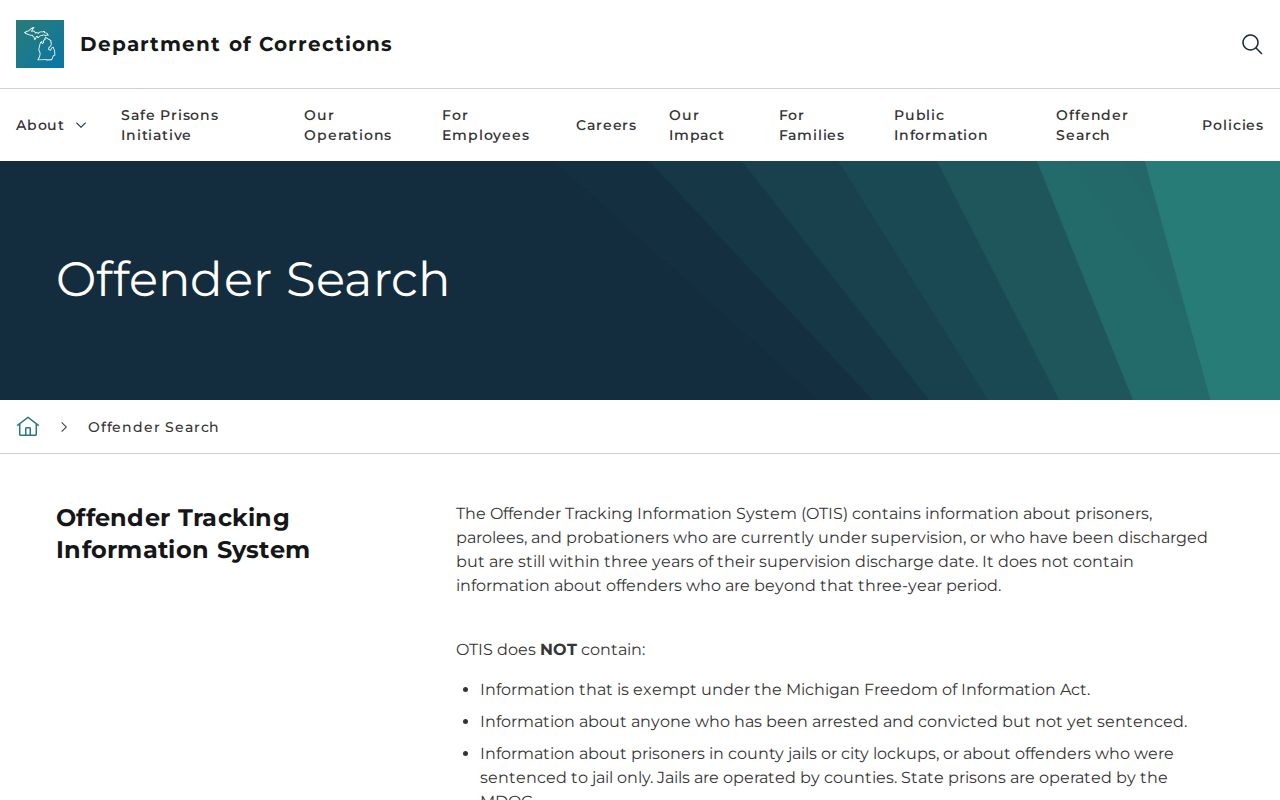
The screen helps confirm that OTIS is for MDOC records, not a Livingston County Jail-only release.
Livingston County Court Release Trail
Livingston County has two main criminal-court paths. The 53rd District Court handles misdemeanors and the early stages of felony matters. The 44th Circuit Court holds felony trial and sentencing records. A district-court bond event can authorize a jail departure even when the later felony disposition appears in circuit court.
Search the correct 53rd District Court MiCOURT register or the 44th Circuit Court register. Look for bond changes, dismissal, plea or verdict, sentence, jail credit, probation, violations, discharge, and signed orders. The register explains the legal event. The jail record remains the stronger source for actual exit time and whether the movement was release or transfer.
The official district-court search interface is a useful lead when a Livingston County release followed a bond or misdemeanor event.
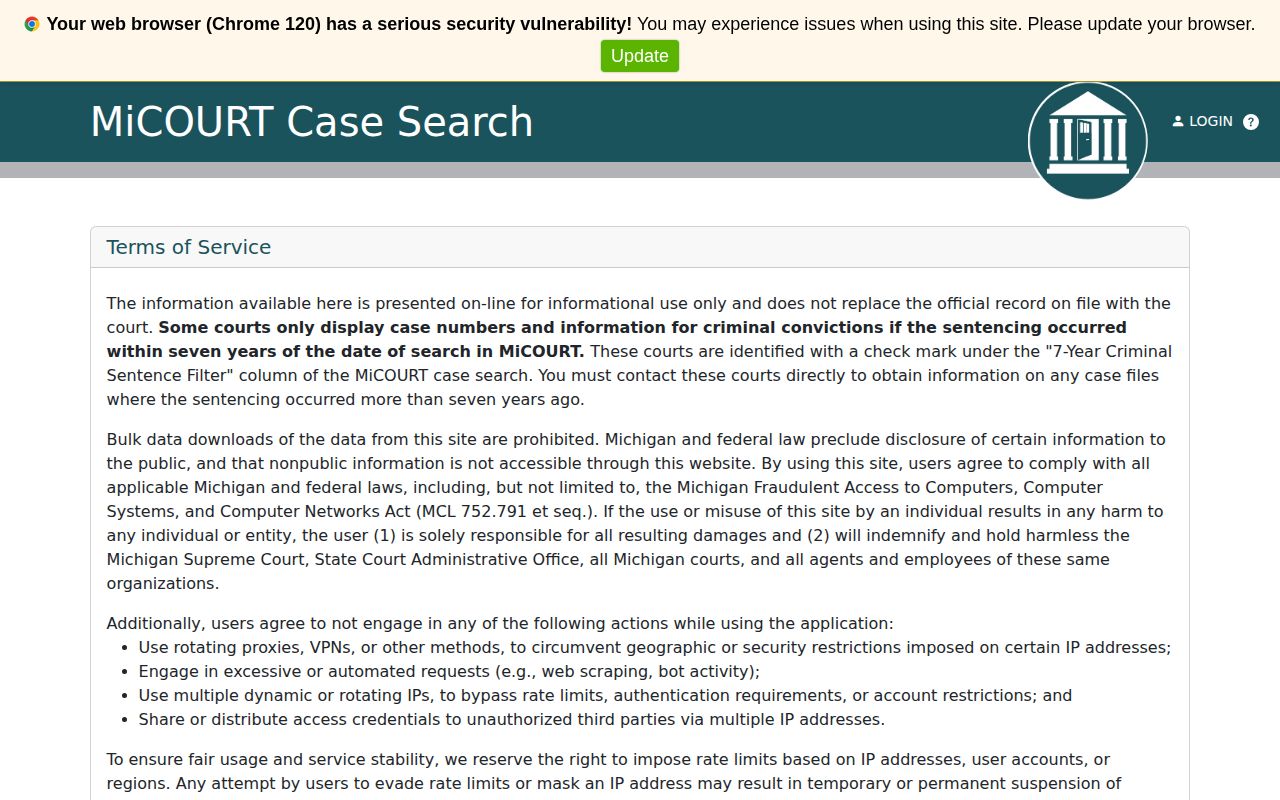
The portal should be searched by the person or case, then paired with the jail movement when the physical release time is in question.
Livingston County Recent Release Gap
Livingston County, Michigan did not publish a verified rolling 24-hour list, 72-hour list, current inmate roster, release-date filter, or sheriff jail-information app during the research sweep. There is no truthful feed cadence, photo field, or retention window to report. Michigan VINE is a person search and notification service, not a substitute sheriff roster.
For a recent release, check VINE, call the jail, review MiCOURT, and request the release movement if a durable record is needed. Follow any transfer into the receiving system. This gap is why the name’s absence from an online source carries so little weight in Livingston County.
Getting Home After Livingston Release
Livingston Essential Transportation Service, or LETS, is countywide public transportation open to everyone. Reservations use (517) 546-6600 option 3 or the LETS GO app. The county reports limited same-day capacity and advises riders to schedule as far ahead as possible, including the return trip.
No official source promises a jail-door pickup, an immediate ride, or transport after every release hour. A rider should confirm the pickup point, operating time, and distance-zone fare with LETS. Transportation planning does not verify custody status. First confirm that the Livingston County jail movement was a community release, then make the trip plan with the transit provider.
Note: LETS may help with a planned trip, but it is not a guaranteed or on-demand jail release service.
Livingston County ICE Release Checks
A departure from Livingston County Jail can be a transfer to ICE. That is continuing custody, not release into the community. Search the ICE Online Detainee Locator System by A-number and country of birth or the offered biographical fields. ICE says the system includes current detainees and people released from ICE custody during the prior 60 days. It does not show records for people under 18.
The short locator horizon matters. An ICE match after a Livingston County movement identifies the next custody system. An older immigration event may require ICE contact or records rather than a live result. The county release record should still be requested when the question is whether Livingston transferred the person rather than released them to the community.
Federal Releases Connected to Livingston
No federal prison was identified in Livingston County, but a county-connected case may enter federal custody. The BOP Inmate Locator generally covers federal inmates from 1982 forward. A past release date with no facility, or a location shown as “RELEASED,” supports that the person left BOP custody. It does not rule out federal supervised release, another jurisdiction’s custody, or a later arrest.
U.S. Marshals Service pretrial custody has no public release locator like BOP. Use the federal court record, BOP when applicable, and a focused USMS request for older records. “IN TRANSIT” is not release.
The BOP record explanation shows how the RELEASED label and date fields should be read.
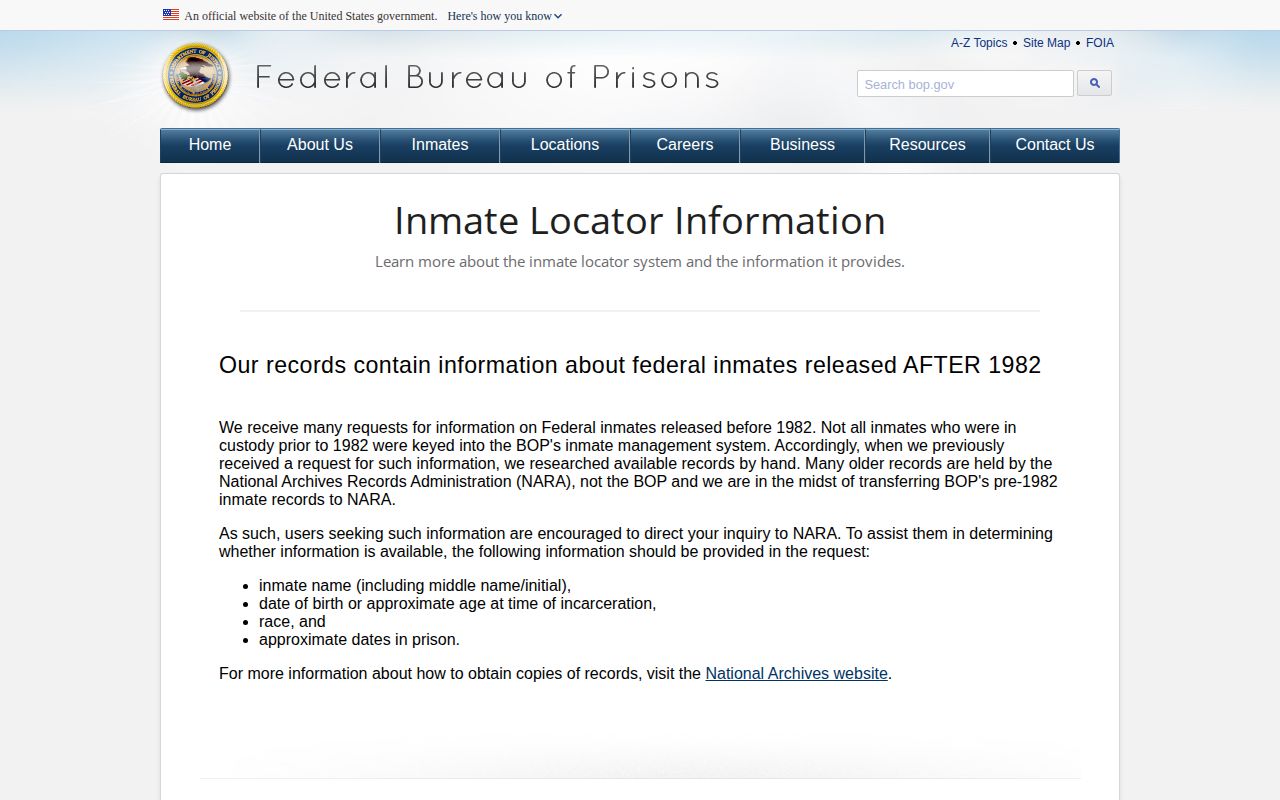
The federal result must stay separate from Livingston County Jail and Michigan Department of Corrections status.
Livingston County Release Facility History
The operating Livingston County Jail began in 1972 with 62 beds. It expanded to 205 beds in 1996, 254 in 2003, and 411 after work completed in 2015 and 2016. That history identifies the Highlander Way jail as the county’s adult custody center.
Maxey Training School in Whitmore Lake closed in 2015. It is not a current adult detention or release location. Former juvenile records also follow confidentiality and retention rules that differ from adult jail and OTIS records. Woodland Center Correctional Facility remains an active MDOC prison, but its releases and transfers are tracked through OTIS and MDOC records rather than the county jail path. These distinctions help reject stale facility listings and false matches.
Verify Livingston County Release Sources
Livingston County searches carry two unusual traps. Search results prominently show a Livingston County, Missouri sheriff page with a “Released Inmates” feature. That page belongs to Missouri, not Michigan. The official Michigan jail page also warns that the similarly named LivingstonCoutyJail.org is not official and should not be used for jail information or payments.
Confirm the state, the 517 telephone area code, and the milivcounty.gov jail domain before relying on a source. An official county page, MiCOURT, a Michigan state portal, or a federal agency system provides a traceable starting point. A wrong-state page can look locally relevant while supplying an entirely different jail’s people and records.
Compare Livingston County Release Status
Each search channel has a defined boundary. Use the source that answers the custody question at hand, and do not turn a system-specific status into a broader claim.
| Situation | Where to look | What a result proves |
|---|---|---|
| Recent county-jail event | MI-VINE, jail, MiCOURT, and Sheriff FOIA | Reported status, legal event, and recorded movement when combined |
| Still in Livingston jail custody | Jail or current VINE reporting | Current local custody as reported at that time |
| State prisoner or parolee | OTIS | MDOC status, location, sentence dates, parole, or recent discharge |
| County-jail-only sentence | Jail, court, and Sheriff FOIA | Local release or transfer; OTIS does not cover this group |
| Federal BOP release | BOP locator | Departure from BOP custody only |
| Possible immigration transfer | ICE ODLS and jail movement | Current or recent ICE status and whether Livingston transferred custody |
Michigan VINE reports events and sends release or transfer notices. It is not a permanent archive. OTIS generally keeps discharged people for three years after supervision discharge. Other records have separate access rules.
Livingston County Release Facilities
Livingston County release searches can cross six facility or custody systems. The primary jail comes first. Each later system requires its own record channel.
- Livingston County Jail: confirm a community release or transfer through VINE, jail contact, MiCOURT, and Sheriff records.
- Woodland Center Correctional Facility (WCC): use OTIS for prison, parole, transfer, and discharge status.
- Maxey Training School / W. J. Maxey Boys Training School (closed): treat it as a historic juvenile facility, not a present adult release source.
- Federal Bureau of Prisons system: use the national BOP locator for sentenced federal custody and past BOP release dates.
- ICE detention network: use ODLS for current custody and its limited recent-release period.
- U.S. Marshals Service detention network: use the federal court record and USMS records process because no public release locator exists.
A transfer between these systems is not a community release. Follow the receiving agency until the record shows parole, discharge, or another verified departure.